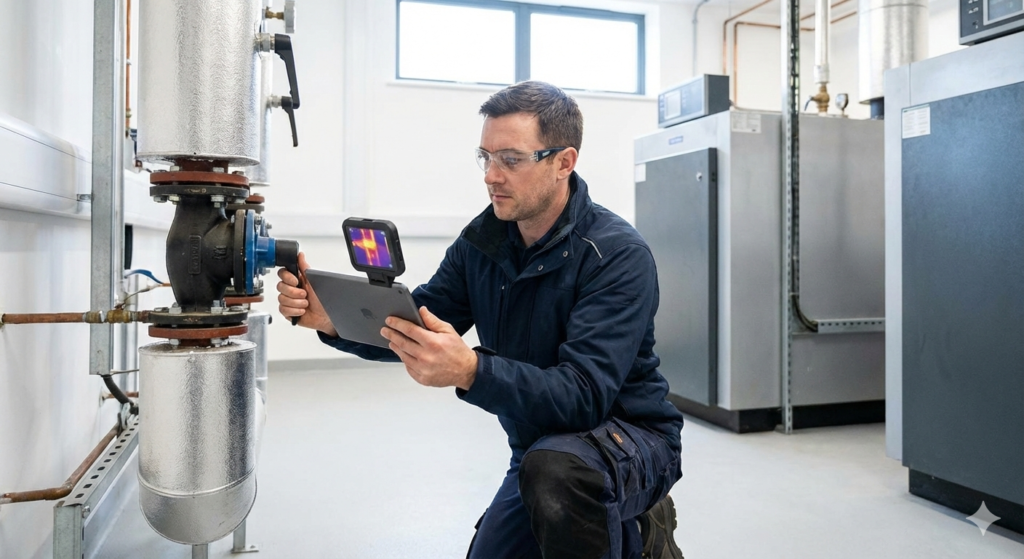

Professional cleaning, inspection and disinfection of cold-water water storage tanks and vessels.
What It Is
Tank inspection, cleaning and disinfection is a core part of legionella control in commercial buildings. Cold water storage tanks can accumulate sediment, biofilm and debris over time, creating conditions favourable to bacterial growth, including legionella.
Under ACoP L8 (Approved Code of Practice: Legionnaires’ disease — The control of legionella bacteria in water systems) and HSG274 Part 2, duty holders must ensure cold water storage tanks are inspected regularly and maintained in a clean condition. This is a legal requirement, not optional guidance.
Tank Cleaning & Desinfection: Why it Matters
Cold water storage tanks are a recognised risk factor for legionella. Stagnant water, sediment build-up, inadequate lids, poor insulation and debris ingress all create conditions where bacteria can multiply.
The Health and Safety Executive expects duty holders to demonstrate that tanks are inspected, that their condition is assessed, and that appropriate action is taken. Failing to do so can result in enforcement action, prosecution and significant fines following an outbreak or identified failing.
Regular inspection and cleaning protects building occupants, demonstrates compliance and reduces the risk of costly remedial work or system failures.
Inspection First
Not every tank needs cleaning at every visit. The inspection determines the condition and what action is required. Our inspections assess:
Internal condition of the tank
(walls, base, fittings)
Lid integrity and security
Insulation condition
Overflow, vent and warning pipe arrangements
Presence of sediment, debris or contamination
Evidence of biofilm or discolouration
Pipework connections and potential deadlegs
Following inspection, we report on condition and recommend appropriate actions. If cleaning and disinfection is required, we carry out the work. If remedial repairs are needed (lid replacement, insulation, pipework modifications), we can support with these too.
What sets us apart
What is included
- Isolation and drainage of tank
- Physical removal of sediment and debris
- Cleaning of internal surfaces
- Inspection of tank condition
- Chlorination and disinfection of tank and associated pipework
- Refilling and flushing to remove residual disinfectant
- Post-clean water sampling (optional but recommended)
- Photographic record and written report
Legislative Context
- Your duties relating to cold water storage tanks come from:
- Health and Safety at Work Act 1974 – general duty to ensure the health and safety of employees and others
- Control of Substances Hazardous to Health Regulations 2002 (COSHH) – legionella is a biological agent; exposure must be controlled
- ACoP L8 – approved code of practice setting out how to comply with the law
- HSG274 Part 2 – technical guidance on hot and cold water systems
Together, these require duty holders to identify and assess risks, implement controls, and maintain systems in a condition that prevents bacterial growth.
Recommended Frequency
Cold water storage tanks should be inspected at least annually.
Cleaning frequency depends on condition and water quality, but most tanks require cleaning every one to two years. Your risk assessment should specify appropriate intervals based on site-specific factors.
What You Receive
- Tank inspection report with condition assessment
- Photographic record (before and after if cleaned)
- Cleaning and disinfection certificate
- Recommendations for any remedial works
- Sampling results (if sampling included)
Remedial Support
- Where inspections identify issues beyond cleaning, we can help. Common remedials include:
- Lid replacement or repair
- Insulation upgrades
- Overflow and vent pipe screening
- Removal of redundant pipework connections
- Ball valve replacement
- Tank replacement where beyond economic repair
- We provide recommendations, quotations and delivery, keeping everything under one programme.
Common Issues We Find
- Tanks not inspected for several years
- Damaged or missing lids allowing contamination
- Inadequate insulation leading to temperature problems
- Sediment build-up creating conditions for bacterial growth
- Overflow or vent pipes without insect screens
- Redundant pipework connections creating deadlegs
- No photographic or written records of previous inspections
All Legionella & Water Hygiene Services
Legionella Risk Assessments
Cleaning & Disinfection Services

Legionella Monitoring & Maintenance
Cooling Tower Treatment